What Are Interactive Event Experiences?
2026-09-164 min read
2026-09-164 min read

Most event organisers face the same challenge: attracting attention is difficult, but holding it is even harder.
Exhibition halls are crowded. Product launches compete with dozens of other messages. Visitors are overwhelmed with screens, brochures and sales pitches. In that environment, simply showing information is rarely enough.
Interactive event experiences are designed to change that. Rather than asking people to watch, listen or walk past, they invite people to participate. And that small shift can make a big difference to how a brand is understood, remembered and talked about long after the event ends.
An interactive event experience is any digital or physical experience that responds to audience participation.
Instead of passively consuming content, visitors actively engage with it. They might explore a product through a touchscreen experience, take part in a gamified challenge, interact with a live data visualisation, use an augmented reality (AR) application or step into an immersive environment designed around a brand story.
The interaction itself is not the objective.
The objective is to create a stronger connection between the audience and the brand.
The role of events has changed.
For years, many brands approached exhibitions and activations as opportunities to display products and distribute information. Today, audiences expect more. They want experiences that are engaging, personalised and worth their time.
At the same time, marketing teams face growing pressure to justify event investment. Brand awareness alone is no longer enough. Events are increasingly expected to generate engagement, support sales conversations and create measurable value.
Interactive experiences help bridge that gap by turning visitors from observers into participants.
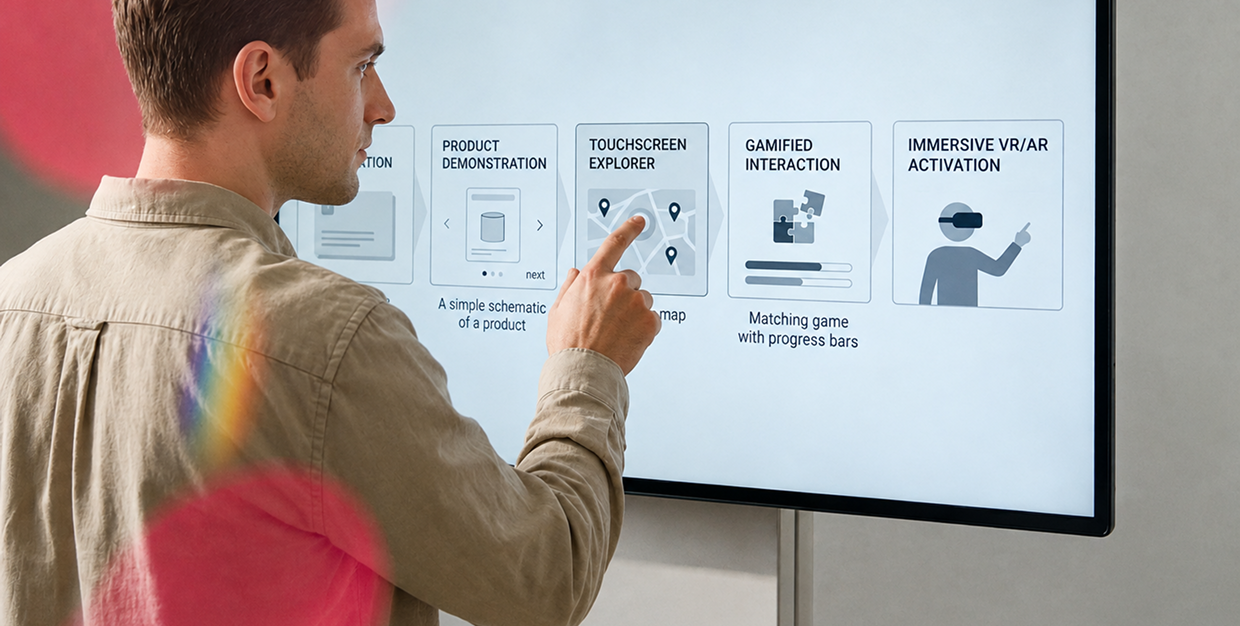
Passive Presentation
↓
Product Demo
↓
Touchscreen Experience
↓
Interactive Product Explorer
↓
Gamified Experience
↓
AR / virtual reality (VR) Experience
↓
Immersive Brand Activation
↓
Fully Interactive Environment
The most effective experiences are not always the most technologically advanced.
A well-designed product explorer that helps visitors understand a complex solution can often create more value than an expensive installation with little relevance to the audience.
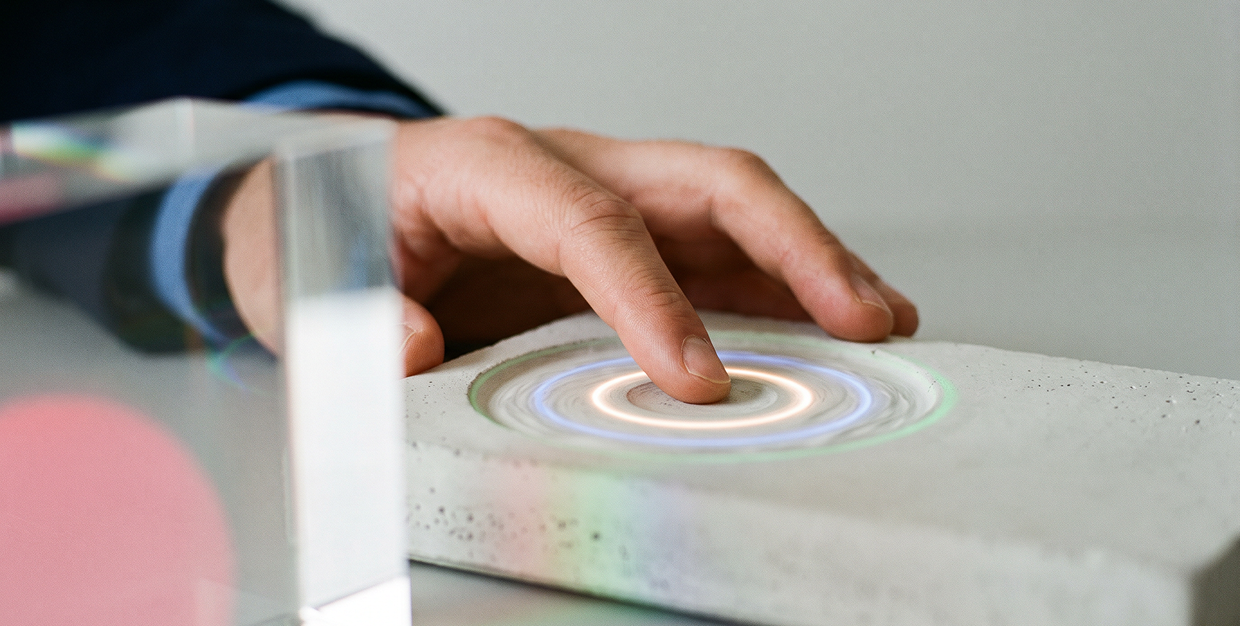
Interactive experiences can take many different forms depending on the event objectives.
Some of the most common examples include:
What they all have in common is that they encourage people to do something rather than simply consume information.
The answer is surprisingly simple.
People tend to remember experiences they participate in more than information they passively receive.
Interaction creates involvement.
Involvement creates understanding.
And understanding makes an experience more memorable.
At Digiten, we often see brands use interactive experiences to solve one of three challenges:
Technology is simply the tool that enables that outcome.
The most common mistake is starting with the technology.
Questions like:
“Should we use AR?”
“Do we need a VR experience?”
“Would a gamified activation work?”
usually arrive too early.
A better question is:
“What do we want people to understand, feel or remember?”
Only then does it make sense to decide whether technology can help create that outcome. The strongest interactive experiences start with a human challenge, not a technical feature.
One of the clearest trends we see across exhibitions, activations and customer experience centres is a shift away from passive displays and towards participation.
Brands are increasingly designing environments that people can explore rather than simply observe.
That trend is explored further in Digiten’s Event Trendbook, which looks at how interactive technologies, immersive experiences and audience expectations are reshaping events across industries.
Interactive event experiences are not about adding technology for the sake of it. They are about creating more meaningful engagement.
When designed well, they help brands attract attention, communicate value and create memorable interactions. Whether that happens through a touchscreen experience, an immersive activation or an interactive exhibition stand, the principle remains the same: people remember what they experience.
And in a world where attention is increasingly difficult to earn, that matters more than ever.